Custom Wooden Built-In Furniture: A Counter for Enjoying and Buying Bread in Ebina, Kanagawa
Custom-Made Counter Designed to Make Both Choosing and Buying Bread Enjoyable
Custom Furniture, Architectural Woodwork, Built-In Fixtures, Remodeling, Repair & Maintenance by OJIKI Workshop
In this article, we would like to introduce a project commissioned by a bakery in Ebina City, Kanagawa Prefecture.
🔸Contents
1. Display Design That Beautifully Showcases Bread
2. Optimized Height and Distance for Customer Service | A Two-Tier Structure
3. Ease of Use for Cash Register and Work Space
4. Materials | Laminated Wood × Melamine
5. Front Panel | A Design That Brings the Space Together
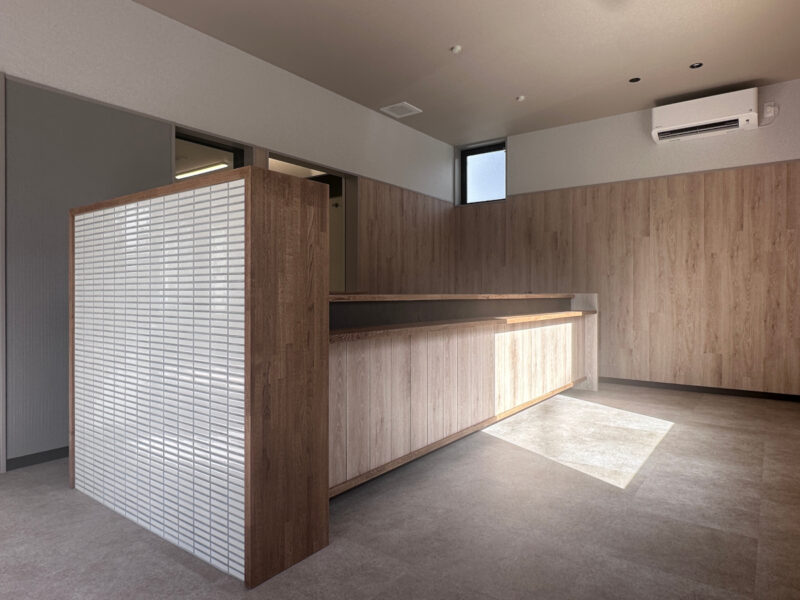
1. Display Design That Beautifully Showcases Bread
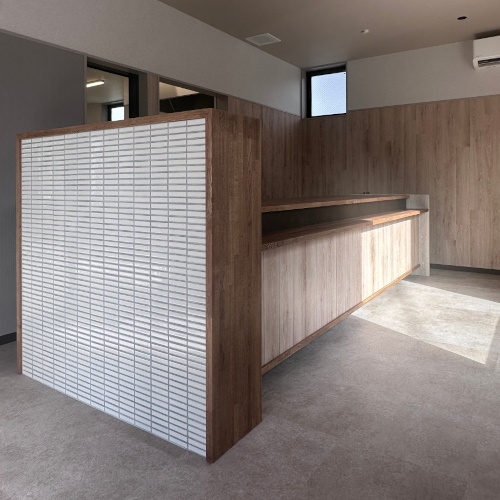
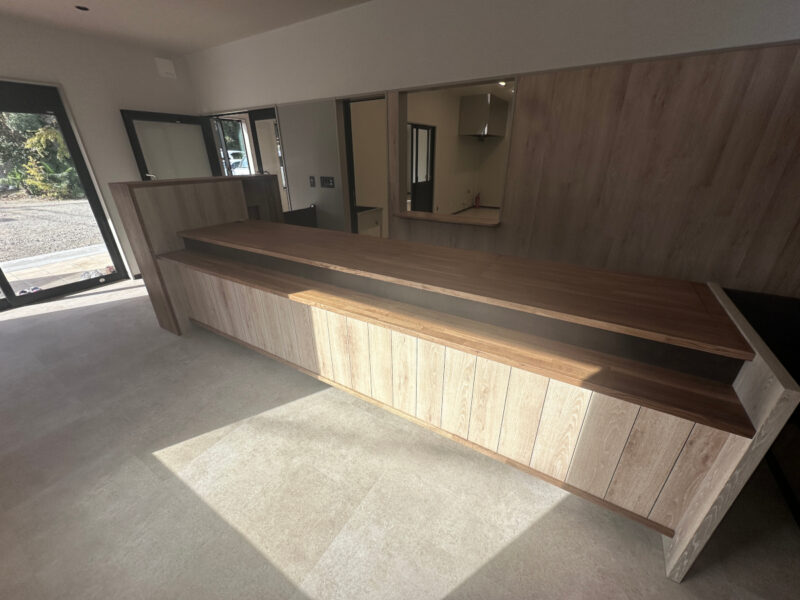
During actual sales, bread is displayed on the two-tier counter so that customers can easily see and choose what they would like to buy.
・A height that makes products easy to view
・A depth that makes products easy to reach
・Enough space to arrange different types of bread
And more
With these points in mind, we designed the counter so that the bread can be displayed in a way that naturally makes customers want to reach for it.
2. Optimized Height and Distance for Customer Service | A Two-Tier Structure
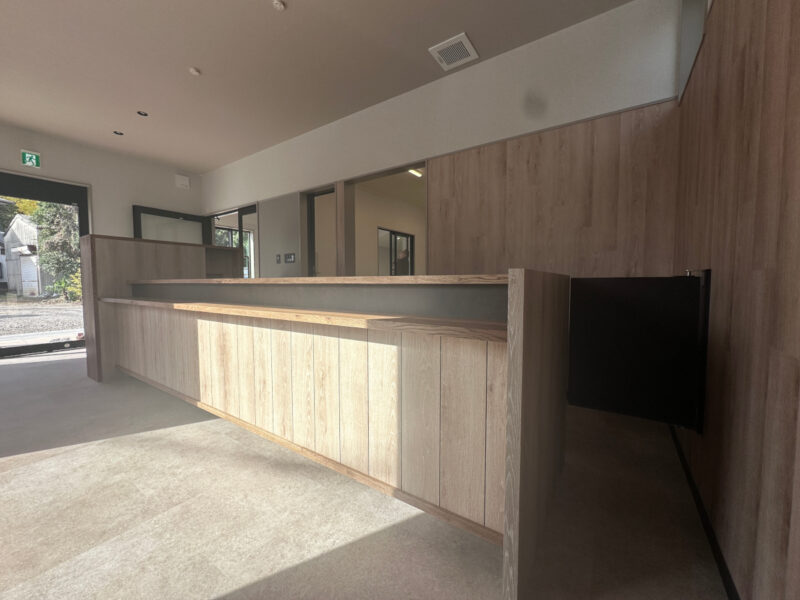
Because this counter is used for both displaying and selling bread, we adjusted the width and height of the counter with the following points in mind.
・A comfortable distance that is neither too close nor too far from customers
・A height that allows smooth handover of products
The counter has a two-tier structure with different levels.
Both the upper and lower tiers can be used as bread display spaces, while also supporting store sales operations.
“Upper tier: Work and cash register space”
“Lower tier: Space for recommended product notices and temporary bag placement at the register”
The counter was designed with actual customer service in mind, allowing natural interaction during sales and creating a smooth, stress-free service flow.
3. Ease of Use for Cash Register and Work Space
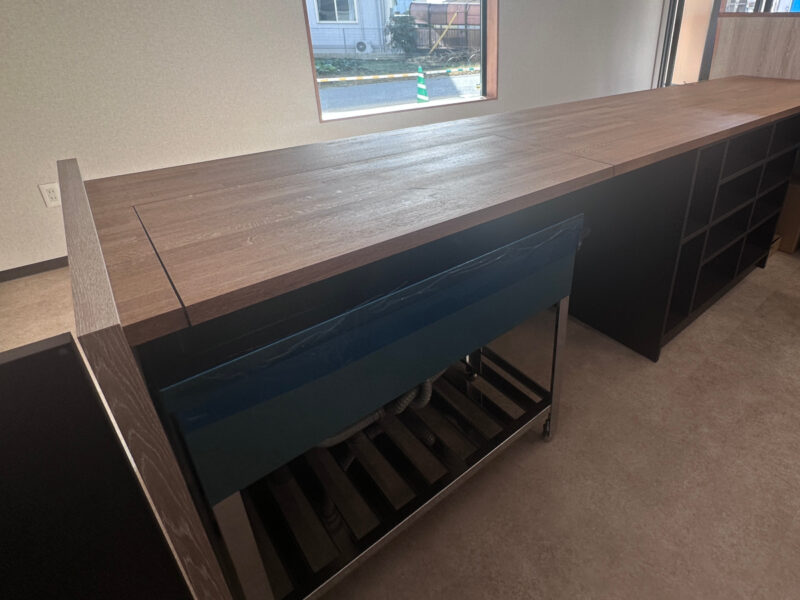
On the inside of the counter, on the store staff side, we secured space for the cash register and equipment.
・Enough space for smooth checkout work
・A design that keeps equipment neatly organized
・Foot space that allows staff to move easily
Before production, we asked in advance about the location and size of drawers and other storage, the position of the sink, and other details according to the actual workflow of the shop.
4. Materials | Laminated Wood × Melamine
For the counter, we selected materials with both appearance and ease of use in mind.
・Laminated wood that gives a warm wooden impression
・Melamine material that is resistant to water and dirt and easy to maintain
By combining these two materials, the counter achieves a finish that values both visual appeal and practical usability.
・A natural look that gently blends into the shop
・Easy maintenance, allowing dirt to be quickly wiped away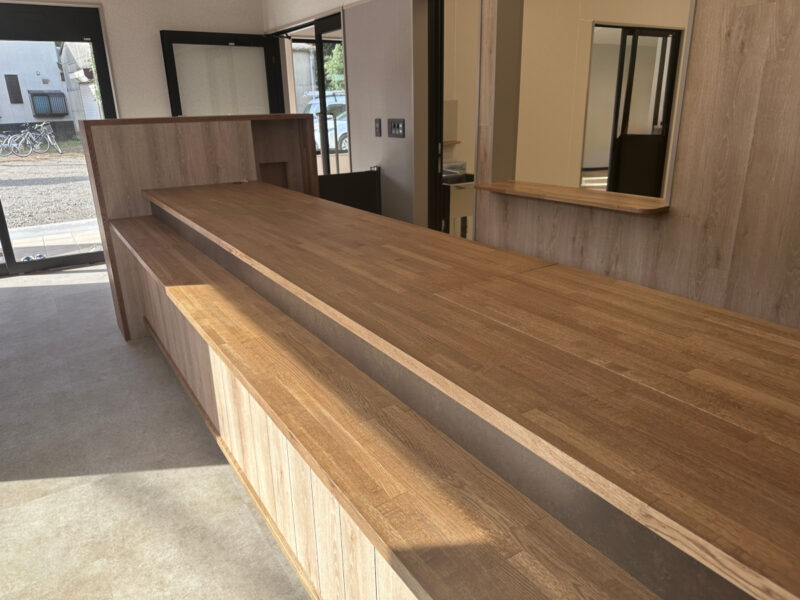
5. Front Panel | A Design That Brings the Space Together
The front panel of the counter is an important element that shapes the overall impression of the space.
While making the most of the natural expression of wood, it was finished with a simple and calm atmosphere.
It has just the right presence, bringing the space together without being overly assertive.
At OJIKI Workshop, we can also create store counters that achieve both ease of use and ease of selling.
・Sizes tailored to the scale of the shop
・Shapes and specifications suited to the sales style
・Designs that take workflow into consideration
And more
For shops where customer interaction happens at close range, the counter design directly affects the impression of the entire store.
If you are planning to open or renovate a shop, please feel free to contact us.
At OJIKI Workshop, we handle not only custom-made furniture and architectural woodwork, but also a wide range of repair and maintenance services, including restoration of high-gloss painted finishes on well-used furniture and the revival of antique furniture.
For detailed consultations and estimates, please feel free to contact us via our official LINE account, by phone, or through our inquiry form.
Phone: 046-204-5592 (Weekdays 9:00–18:00)
LINE: OJIKI Workshop Official Account


《About OJIKI Workshop》
OJIKI Workshop manufactures and sells furniture, doors, and architectural woodwork made from solid natural wood.
In addition to selling our original products, we also provide custom-made furniture, remodeling, repair, and maintenance services for unused furniture, aged doors, and built-in woodwork that no longer suits modern lifestyles.
For remodeling, repair, and maintenance projects, we listen carefully to our clients’ requests regarding design, functionality, and usability before beginning production. This approach has earned us many words of appreciation from our customers.
We hope to meet the needs of customers who wish to use their wooden furniture and wooden architectural elements with care for many years to come.
⚫︎You want to repair and maintain beloved furniture or doors so you can continue using them for a long time.
⚫︎You want to remodel furniture that your family has used for many years so it better suits your current lifestyle.
⚫︎You want to order custom-made furniture or doors made from natural materials, with careful attention to both design and usability.
⚫︎You want to live in a healthier environment, both physically and mentally, by using natural materials in the furniture and doors of your home.
⚫︎You want to incorporate a relaxing environment with natural materials into your office.
⚫︎You want to create a shop that uses plenty of natural materials.
And more.
For consultations about furniture and architectural woodwork made from natural materials, please leave it to us at OJIKI Workshop.
We look forward to hearing from you.
==============
OJIKI Co., Ltd.
Wooden Furniture and Wooden Architectural Woodwork [Custom-Made, Remodeling, Repair]
Zama, Yamato, Sagamihara
5-49-16 Hibarigaoka, Zama City, Kanagawa 252-0003, Japan
Phone: 046-204-5592 (Weekdays 9:00–18:00)
Representative Director: Kenichi Okawa
Profile
Graduated from the Department of Architecture, Faculty of Engineering, Tokai University
Graduated from Chippendale International School of Furniture in the United Kingdom
(Furniture making and antique furniture repair)
Trained for three years at Rengesou Motomachi Workshop
Based on the traditional production process of Yokohama furniture, which has continued for more than 100 years, he continues to explore new designs using materials such as iron, leather, and glass while engaging in woodworking every day.
=============