


Should You Repair or Replace Your Furniture? A Woodworker Explains the Key Decision Points
Scratches and peeling finish on a dining table you have used for many years, or wobbling in a favorite chair.
When you begin to think, “Maybe it is time to replace it…,” the choice that comes to mind may be whether to replace it with a new piece of furniture, purchase or order something new, or repair it and continue using it for many more years.
If the furniture is filled with memories, or if it has a level of quality that is difficult to find today, the decision can be very difficult.
“How much would it cost to repair?”
“Would it be cheaper to buy something new after all?”
“Should I just choose a low-cost repair as a temporary fix?”
“I still want to use it, so I would like to repair it, but I am worried whether the work will be done properly…”
and more
In this article, for those who have these kinds of concerns,
we will explain the difference between “replacement” and “repair” as clearly as possible, so please read through to the end.
🔸Contents
1. Case 1: Replacing Furniture with New Furniture
2. Case 2: Repairing Furniture and Continuing to Use It
3. Cases Where Partial Furniture Repair Is Suitable
4. When in Doubt, Consulting a Professional Is Also Recommended
5. What OJIKI Workshop Values in Furniture Repair
1. Case 1: Replacing Furniture with New Furniture
Repair has many benefits, but it is not always the best choice in every case.
Precisely because the furniture has been used for many years, replacing it with new furniture may sometimes lead to greater satisfaction when considering your future lifestyle.
◯ When your lifestyle has changed significantly and the role required of the furniture has changed
For example, in the following cases, replacing your current furniture with furniture suited to your present lifestyle may greatly improve everyday usability, rather than repairing and continuing to use the existing piece.
・Your children have become independent, and the household is now only a couple
・Your family structure has changed, and the size of the table or storage no longer fits
・You want to reconsider the entire interior due to renovation or building a new home
and more
◯ When you want to choose furniture with the next 20 years in mind
Among those who are unsure whether to repair furniture they have used for 15 or 20 years, many think, “If I am going to spend money anyway, I want furniture that I can continue using for many years ahead.”
In such cases, we recommend comparing the repair cost with the cost of new production or purchase, while also considering durability, usability, and design.
Especially if you are particular about size, storage capacity, or the type of wood, considering custom-made furniture as an option can help you obtain furniture that truly suits your current lifestyle.
◯ When you do not have a strong attachment to the furniture itself
The value of repair increases when there is affection for the furniture itself or a strong desire to continue using it.
If the following applies, replacing it with new furniture may sometimes lead to greater satisfaction than spending money on repair.
・You do not have a particular emotional attachment to it
・You find the current furniture difficult to use
・You want to completely refresh the design
and more
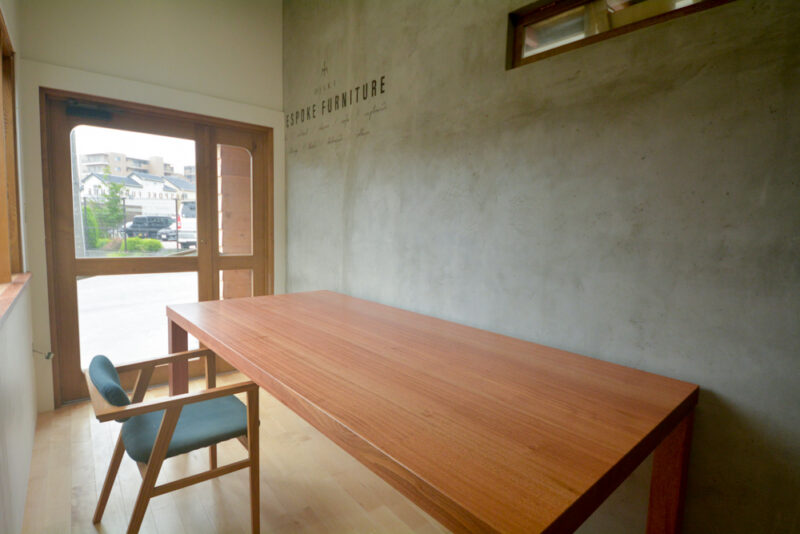
2. Case 2: Repairing Furniture and Continuing to Use It
Even if furniture used for many years has accumulated scratches and stains, it can often continue to be used for many years with proper repair and maintenance. In particular, solid wood furniture and well-made furniture can often regain beauty and comfort close to its original condition.
◯ When you do not have major dissatisfaction with the comfort and usability of your current furniture
For example, in the following cases, repair or refinishing may provide even greater satisfaction than replacement.
・The size and height suit your current lifestyle
・You like the wood texture and design
・You do not want to replace it because it is damaged; you want to make it beautiful and continue using it
and more
◯ When you want to cherish furniture with attachment or memories
A dining table that has spent many years with your family, or furniture passed down from your parents, has value that cannot be measured in money.
Even if it requires some cost, if you feel, “I want to continue using this furniture,” repair is a choice with sufficient value.
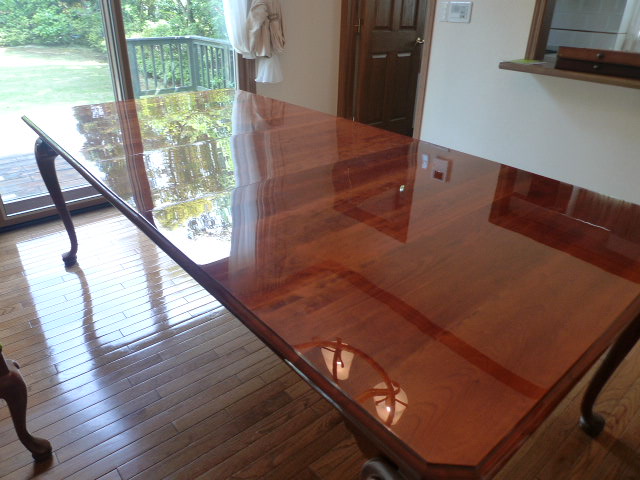
◯ When the furniture has a level of quality that is difficult to obtain today
Many older pieces of furniture are made from high-quality solid wood that is difficult to obtain today, or were made with a great deal of time and care. Purchasing new furniture of the same quality can often be far more expensive than expected.
For this reason, if the structure is solid, repairing and restoring the furniture may ultimately offer better cost performance than replacing it.
◯ When the only reason for replacement is that it “looks old”
Furniture used for many years can look older than it actually is due to finish deterioration and small scratches. However, by sanding the surface, refinishing it, or repairing wobbling, it can often become surprisingly beautiful again.
If you are thinking, “It is still usable, but I am considering replacing it just because of how it looks,” it is worth consulting once to see whether repair is possible. We recommend contacting a workshop with woodworking skills, such as OJIKI Workshop.
Comparison Between Replacement and Repair
| Decision Point | Repair Is Recommended | Replacement Is Recommended |
|---|---|---|
| Compatibility with Lifestyle | You are satisfied with the current size and usability | Your family structure or lifestyle has changed, and the size or purpose no longer fits |
| Attachment to the Furniture | Furniture you have used for many years and have affection or memories attached to | You have little attachment and want to incorporate a new design or function |
| Furniture Quality | Solid wood or well-made furniture that can still be used sufficiently | You want to choose new furniture suited to your current lifestyle |
| Main Concerns | Scratches, stains, finish deterioration, wobbling, and similar issues are the main concerns | You also want to reconsider functional aspects such as insufficient storage, insufficient size, or design changes |
| Future Perspective | You want to continue using your favorite furniture for many years ahead | You want to invest in new furniture with the next 20 years in mind |
| Recommended Choice | Consider repair, refinishing, or maintenance | Consider new furniture, either ready-made or custom-made |
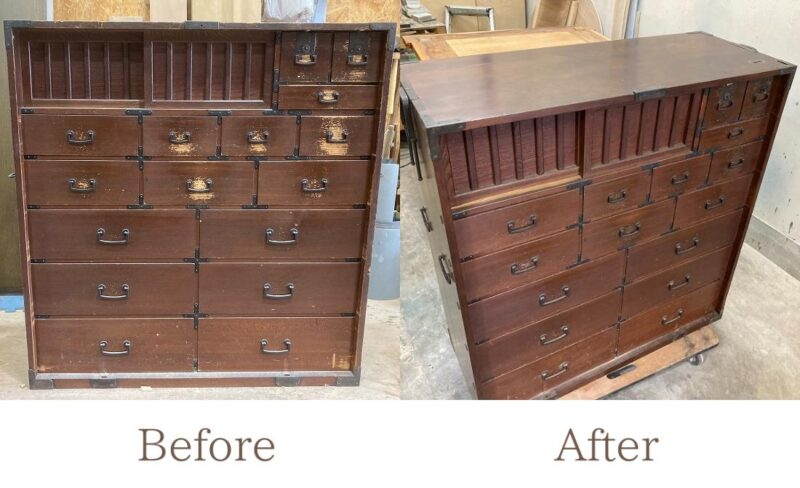
3. Cases Where Partial Furniture Repair Is Suitable
Furniture repair includes not only restoration of the entire piece, but also “partial repair,” which fixes only the area of concern.
For example, partial repair may be suitable in many cases such as the following.
・“It is still usable, but I want to do something about this one scratch.”
・“If the wobbling can be fixed and I can use it for a few more years, that is enough.”
and more
◎ Examples of Common Partial Repairs
・Repairing only the area with scratches or dents
・Repairing only the part where the finish has peeled
・Replacing only the broken part
・Cutting or adjusting table or chair legs to improve wobbling
・Retightening loose joints to eliminate wobbling
and more
The major advantage of partial repair is that only the necessary areas are worked on, making it possible to respond in a relatively short time and at a lower cost.
If you feel that “a large-scale repair may not be necessary,” it is a good idea to first consult a woodworker and check whether partial repair is possible.
We have summarized this in an easy-to-understand table.
| Comparison Item | Partial Repair | Full Repair and Restoration |
|---|---|---|
| Purpose | To improve only the specific issue and make the furniture easier to use going forward | To review the entire piece and restore it to a condition where it can continue to be used for many years |
| Work Details | ・Repair of scratches and dents ・Partial finish repair ・Part replacement ・Leg adjustment and wobble improvement |
・Inspection of the entire piece ・Full refinishing ・Reinforcement and repair of joints and structure ・Part replacement and reassembly as needed |
| Work Scope | Only the areas of concern | The entire piece of furniture |
| Cost and Time | Relatively reasonable and short-term | Cost and time vary depending on the work, but the entire piece can be restored |
| Recommended Cases | ・You only want to repair scratches ・You only want to improve wobbling ・It is enough if you can use it for a few more years |
・You want to reset years of scratches and stains ・You want to restore its beauty as much as possible to its original condition ・You want to continue using it for the next 10 to 20 years or more |
| Suitable For | Those who want to resolve only the current issue | Those who want to continue using important furniture for many years, even into the next generation |
Our staff at OJIKI Workshop check the client’s wishes and the condition of the furniture before proposing whether partial repair is sufficient or full-scale repair is necessary.
Please feel free to contact us.
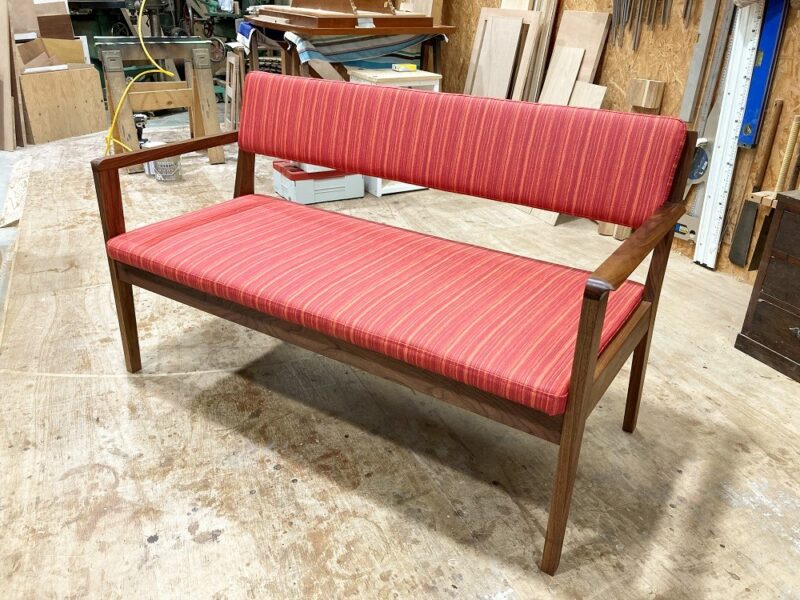
4. When in Doubt, Consulting a Professional Is Also Recommended
“I don’t know whether I should repair it or replace it.”
Many clients who actually consult us have this kind of concern.
Each piece of furniture is different in terms of material, structure, years of use, memories with the family, and future lifestyle. Therefore, it cannot be simply judged as “old, so repair it” or “broken, so replace it.”
At OJIKI Workshop, we do not forcefully recommend repair. After carefully listening to the condition of the furniture and the client’s wishes, we propose the best method for the client.
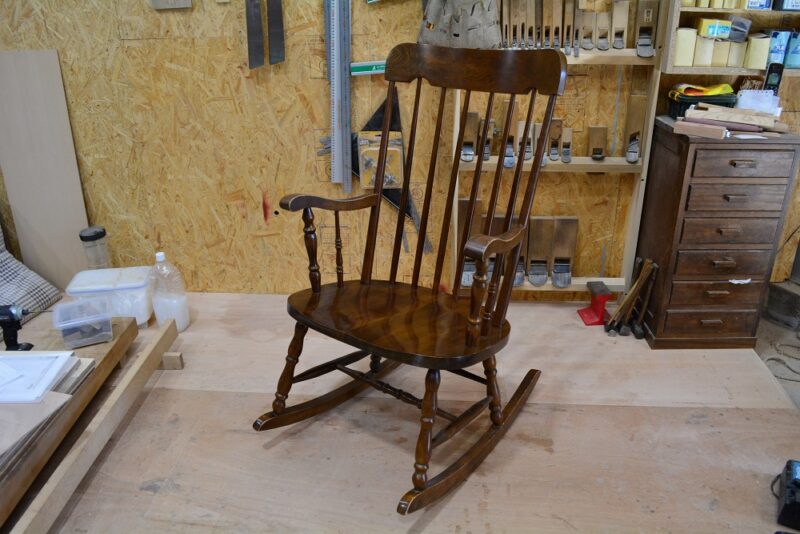
(1) Cases Where We Often Recommend Repair and Maintenance
The following types of furniture can often continue to be used for many years through repair and maintenance.
・Furniture inherited from family members and filled with memories
・Custom-made furniture
・High-quality furniture made from solid wood
・Antique or vintage furniture
・Furniture that fits perfectly with your current lifestyle and room size
・Furniture with scratches or finish deterioration, but with a solid structure
and more
By repairing or maintaining these pieces, rather than replacing them with new furniture, it may be possible to restore their original beauty and comfort and continue using them for another 10 or 20 years.
(2) Cases Where We Often Recommend Replacement, Remodeling, or Custom-Made Furniture
On the other hand, there are cases where proposing new furniture, rather than insisting on repair, leads to a better result for the client.
・The furniture structure is severely damaged and difficult to restore safely
・Decay or deterioration of the wooden parts has progressed, making new production more suitable than repair
・The repair cost is not very different from purchasing a new item
・The size or usability no longer suits your current lifestyle
・You want to keep the memories, but the furniture is difficult to use as it is
and more
In such cases, we propose methods that suit the client’s wishes, including remodeling the furniture into a smaller piece or creating custom-made furniture for a new lifestyle.
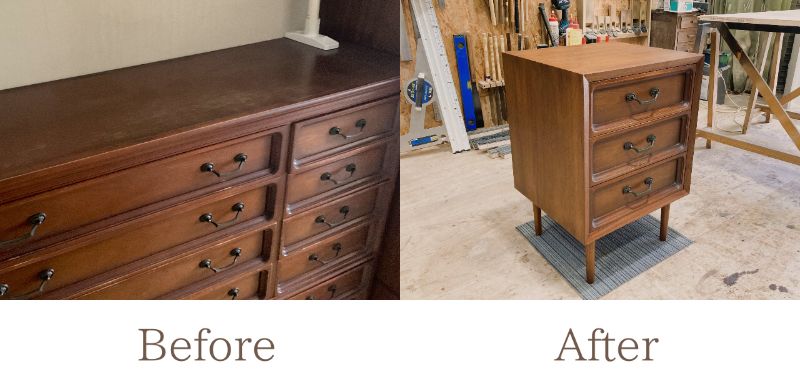
◎ What matters is not simply “repairing it,” but being able to use it with satisfaction going forward
Our goal is not repair itself, nor simply making custom-made furniture.
It is for the client to continue living comfortably with that furniture in the years ahead.
For that reason, if repair is the best choice, we propose repair. If replacement is the best choice, we propose replacement. If remodeling or custom-made furniture is the best choice, we propose that method. When you are unsure whether to repair or replace a piece of furniture, consulting a professional once is a shortcut to choosing furniture without regret.
5. What OJIKI Workshop Values in Furniture Repair
What are repair, restoration, maintenance, and remodeling at OJIKI Workshop?
The repairs carried out by OJIKI Workshop are based on checking not only the furniture itself, but also the client’s entire living environment, including the space where the furniture is used.
The reason is that we approach furniture with the idea of not simply “fixing furniture,” but “connecting the value of the furniture and the future of the client who uses it.”
1. Checking the Condition of the Furniture
First, we carefully inspect the condition of the furniture and carry out the necessary repairs and restoration.
・Wobbling
・Condition of joints
・Cracks or deterioration in wooden parts
・Scratches or peeling in the finish
・Condition of metal fittings and handles
and more
2. Proposal for Repair, Restoration, Maintenance, or Remodeling
After inspection, we present the repair details and estimated cost, and carry out the work after the client is satisfied with the proposal.
(Examples)
・Full sanding of a tabletop or similar surface
・Repair and adjustment of deteriorated bare wood
・Repair that makes use of the wood grain
・Full refinishing of furniture
and more
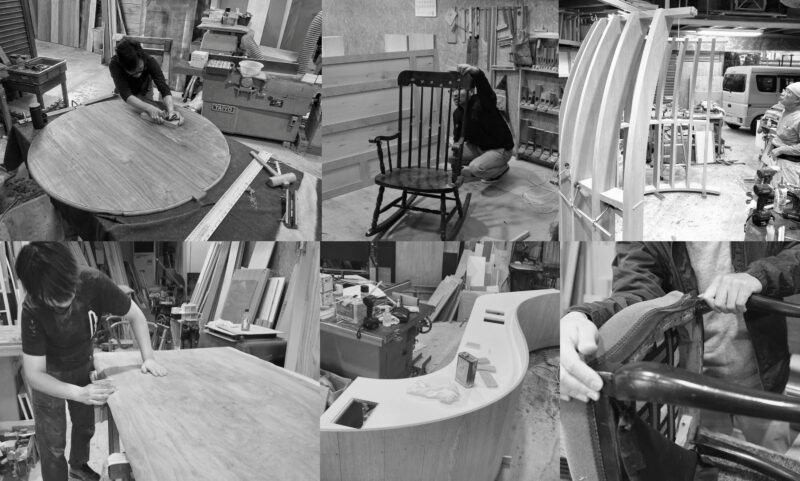
This requires more working time and materials, but in return, the furniture can regain its original beauty and comfort.
Furniture that once seemed to have finished its role returns to the living room with greater depth through a craftsperson’s “re-polishing” and “refinishing.”
That feeling could be called a special luxury unique to furniture restoration.
Summary
As explained above, repair is not necessarily suitable for every person or every piece of wooden furniture.
At the same time, repair by furniture workshop craftspeople is carried out with advanced skills and knowledge, so it is undeniably true that it requires a corresponding amount of time and cost.
At OJIKI Workshop,
we do more than simply repair furniture.
We help clients continue living with and using with confidence the furniture they have loved for many years, furniture inherited from family members, and furniture filled with precious memories.
“Can this furniture still be used?”
“I want to know whether it is worth repairing.”
If you have such concerns, please feel free to contact OJIKI Workshop first.
For detailed consultations and estimates, please feel free to contact us via our official LINE account, by phone, or through our inquiry form.
Phone: 046-204-5592 (Weekdays 9:00–18:00)
LINE: OJIKI Workshop Official Account


《About OJIKI Workshop》
OJIKI Workshop manufactures and sells furniture, doors, and architectural woodwork made from solid natural wood.
In addition to selling our original products, we also provide custom-made furniture, remodeling, repair, and maintenance services for unused furniture, aged doors, and built-in woodwork that no longer suits modern lifestyles.
For remodeling, repair, and maintenance projects, we listen carefully to our clients’ requests regarding design, functionality, and usability before beginning production. This approach has earned us many words of appreciation from our customers.
We hope to meet the needs of customers who wish to use their wooden furniture and wooden architectural elements with care for many years to come.
⚫︎You want to repair and maintain beloved furniture or doors so you can continue using them for a long time.
⚫︎You want to remodel furniture that your family has used for many years so it better suits your current lifestyle.
⚫︎You want to order custom-made furniture or doors made from natural materials, with careful attention to both design and usability.
⚫︎You want to live in a healthier environment, both physically and mentally, by using natural materials in the furniture and doors of your home.
⚫︎You want to incorporate a relaxing environment with natural materials into your office.
⚫︎You want to create a shop that uses plenty of natural materials.
And more.
For consultations about furniture and architectural woodwork made from natural materials, please leave it to us at OJIKI Workshop.
We look forward to hearing from you.
==============
OJIKI Co., Ltd.
Wooden Furniture and Wooden Architectural Woodwork [Custom-Made, Remodeling, Repair]
Zama, Yamato, Sagamihara
5-49-16 Hibarigaoka, Zama City, Kanagawa 252-0003, Japan
Phone: 046-204-5592 (Weekdays 9:00–18:00)
Representative Director: Kenichi Okawa
Profile
Graduated from the Department of Architecture, Faculty of Engineering, Tokai University
Graduated from Chippendale International School of Furniture in the United Kingdom
(Furniture making and antique furniture repair)
Trained for three years at Rengesou Motomachi Workshop
Based on the traditional production process of Yokohama furniture, which has continued for more than 100 years, he continues to explore new designs using materials such as iron, leather, and glass while engaging in woodworking every day.
==============