

How to Choose a Workshop for Antique Furniture Repair | A Guide to Restoring Damaged Furniture | OJIKI Workshop
Not Sure Which Workshop to Choose for Wooden Furniture Repair?
“My favorite antique chair wobbles slightly every time I sit on it.”
“I’m concerned about the scratches on a table I’ve used for years, as well as some missing decorative details.”
“I’d like to keep using my traditional Japanese chest, but it no longer suits the interior of my current home.”
You would like to repair the furniture and continue using it if possible—but where should you take it?
And if the piece has distinctive decorative details or a unique aged finish, you may also wonder whether its original character will be lost after the repair.
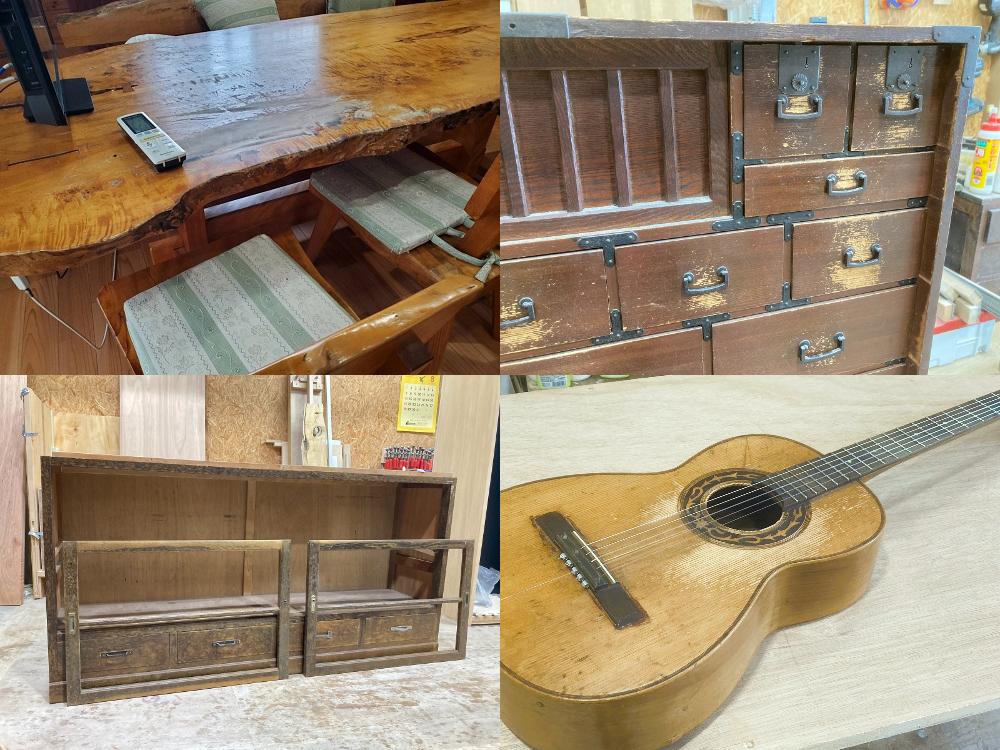
At OJIKI Workshop, we receive many enquiries like these from customers looking to repair wooden furniture they have used and cherished for many years, whether it is Western-style furniture or traditional Japanese furniture.
When a customer contacts us, our craftsmen—who have experience with Victorian furniture and traditional Yokohama furniture—listen directly to the customer’s concerns and requests.
In this article, we explain what to look for when choosing a workshop to repair antique wooden furniture, so you can make a more informed decision before entrusting your furniture to a craftsman.
🔸Contents
1. Common Concerns When Repairing Antique and Traditional Japanese Furniture
2. What to Check When Choosing a Wooden Furniture Repair Workshop
3. OJIKI Workshop Craftsmen Skilled in Victorian and Yokohama Furniture Techniques
4. Start by Telling Us About the Condition of Your Furniture and What You Hope to Achieve
1. Common Concerns When Repairing Antique and Traditional Japanese Furniture
Even when you want to repair a piece of wooden furniture, you may hesitate to ask for help because you’re not sure what’s wrong or how to explain the problem.
You don’t need to know what caused the damage or how the furniture should be repaired before contacting a workshop. Simply describe what you notice about the furniture and what concerns you during everyday use.
A good place to start is by organizing the things that have been bothering you.
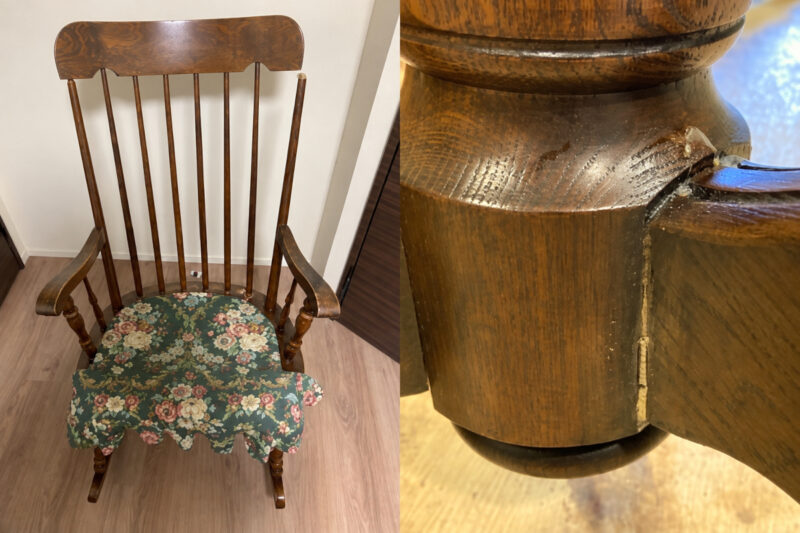
(1) A Wooden Chair or Table Feels Unstable or Wobbly
Try to describe which area feels unstable and what happens when the furniture is being used.
For example:
- The chair rocks when someone sits on it
- The table legs move when pressure is placed on the tabletop
- The tabletop surface is worn or damaged
In cases like these, a furniture craftsman can inspect the joints and individual wooden components for looseness, cracks, or other damage before determining the appropriate repair method.
(2) You Want to Preserve Carved Details and Curved Decorative Elements
If you originally chose a piece because of features such as curved legs or carved details on the backrest, damage to those areas can be especially concerning.
You may wonder whether the furniture can be repaired while retaining the appearance that made you fall in love with it in the first place.
The appropriate repair method for decorative wooden elements depends on how much material is missing and the condition of the remaining structure.
If there is a particular shape, carving, or decorative feature you especially want to preserve, be sure to mention it when discussing the repair.
(3) You Want to Repair the Damage While Preserving the Aged Character
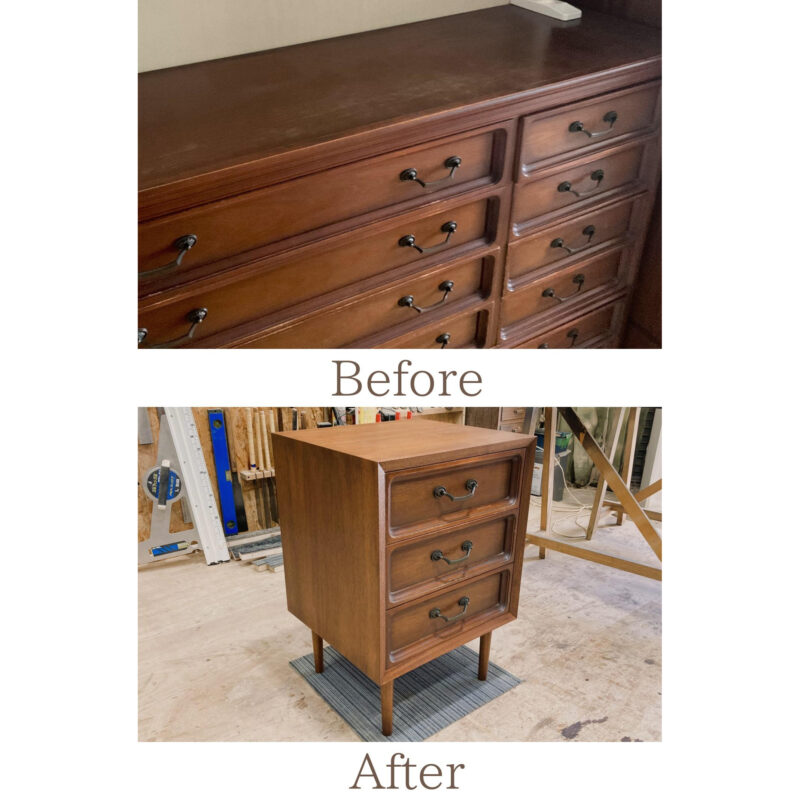
Wooden furniture that has been used for many years often develops a distinctive color, sheen, and patina that becomes part of its appeal.
When requesting repairs, you may want scratches to be less noticeable without making the entire piece look brand new or overly polished.
Please feel free to explain this when discussing the project.
Furniture repair is not only about correcting damaged areas. Discussing how you want the furniture to look and feel after the repair can help prevent disappointment and ensure that the finished piece retains the character you value.
2. What to Check When Choosing a Wooden Furniture Repair Workshop
When looking for a workshop that can repair antique wooden furniture or traditional Japanese furniture, it is worth considering more than just the price.
A. Will They Carefully Assess How the Furniture Was Made and How It Has Been Damaged?
We recommend sending photographs or videos of the furniture you would like repaired so that the craftsman can assess its condition.
Along with the images, explain any scratches, defects, damaged areas, or other problems that you would like them to inspect.
This is important because even furniture that looks similar may be made from different materials or constructed using completely different joints and techniques.
For example, two chairs may both feel wobbly, but one may simply have a loose joint while the other may have a cracked wooden component. The repair required in each case would be very different.
For this reason, it is helpful to clearly explain what feels wrong or damaged at the moment.
After inspecting the furniture, the craftsman should be able to explain what appears to be damaged and what type of repair may be required. You can then use that information to decide whether you would like to proceed with the work.
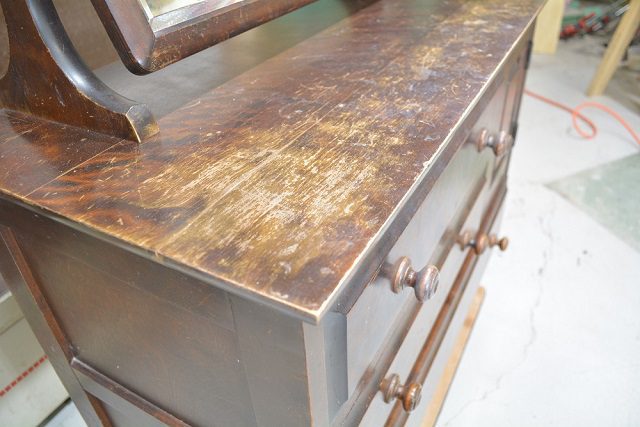
B. Can You Discuss the Decorative Details, Patina, and Future Use You Want to Preserve?
Every customer has different expectations for a furniture repair, and whether those requests can be achieved depends on both the condition of the furniture and the craftsman’s skills.
For example, you may want to:
- Preserve as much of the aged color and natural sheen as possible
- Make scratches and missing areas less noticeable and restore the piece to a near-new appearance
- Improve comfort and usability as well as appearance
- Reduce the size of the furniture or repurpose it for a new use
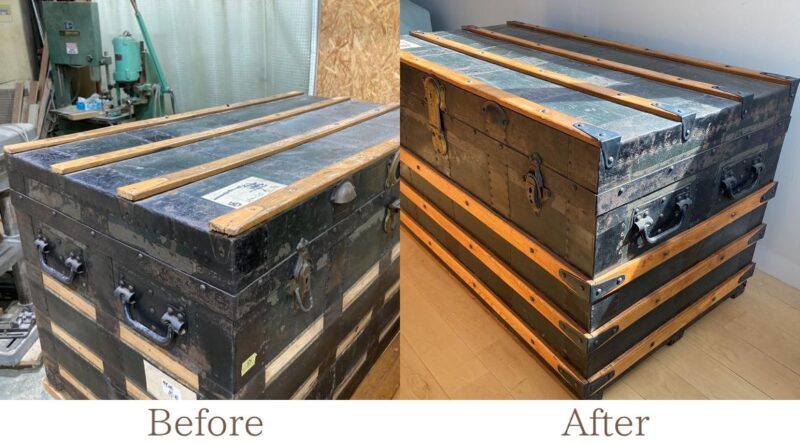
- Change the color so that it better suits your current interior
Whether the desired repair can be achieved will depend on the condition of the furniture and the experience and capabilities of the craftsman.
To avoid feeling that the finished result is different from what you expected, discuss both the desired appearance and how you plan to use the furniture before placing an order.
This helps clarify the scope of work, the intended finish, and whether the workshop can realistically carry out the requested repair.
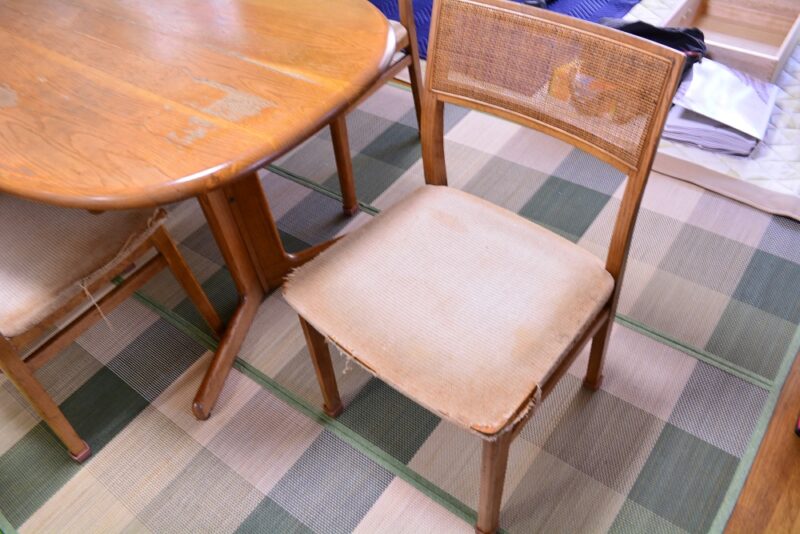
C. Can They Explain the Cost, Repair Time, and Expected Finished Appearance?
Before commissioning a furniture repair, it is helpful to confirm the work involved, the estimated cost, how long the furniture will need to remain at the workshop, and whether repaired areas may differ slightly in color or texture from the original finish.
With wooden furniture in particular, refinishing only one section can often result in some difference in color or texture compared with the surrounding original surface.
If unfamiliar terminology comes up during the consultation, don’t hesitate to ask questions such as:
“What will this area look like after the repair?”
“Exactly which parts are included in the repair?”
Being able to fully understand and agree with the proposed work before proceeding is an important part of choosing the right repair workshop.
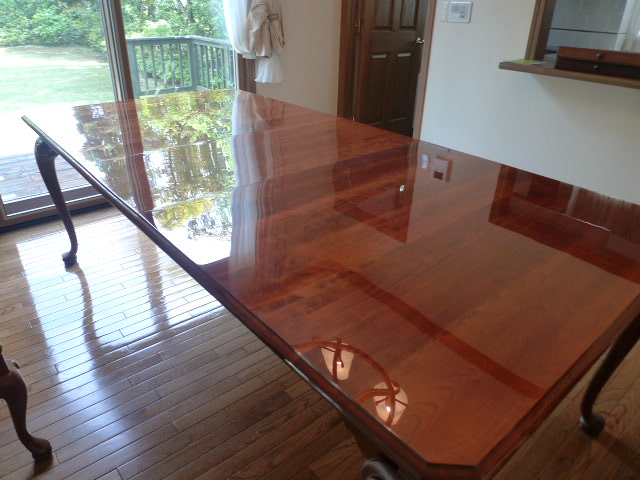
3. OJIKI Workshop Craftsmen Skilled in Victorian and Yokohama Furniture Techniques
When contacting OJIKI Workshop, you do not need to know the technical name of the damage or the repair method.
Simply tell us what the furniture looks like, what happens when you use it, and how you would like it to look or function after the repair.
For example:
- “I especially like the curved cabriole legs and would like to preserve them.”
- “I want to keep the decorative carving on the backrest.”
- “The furniture already suits the room, so I don’t want its overall appearance to change too much.”
- “The chair creaks and tilts when I sit on it, and I’d like that repaired.”
The technical ability of the furniture repair workshop is an important factor when deciding where to entrust a valued piece.
A wooden furniture craftsman examines the visible design features, damaged areas, construction, and the customer’s requests before determining what repairs may be possible.
In other words, a craftsman’s ability to understand the furniture’s construction and design provides the foundation for explaining realistic repair options to the customer.

OJIKI Workshop has craftsmen with experience in both Victorian furniture, one of the best-known traditions of Western furniture, and Yokohama furniture, a distinctive style that combines elements of Western and Japanese furniture craftsmanship.
This allows us to consider repair requests for a wide range of pieces, including both European-style antique furniture and traditional Japanese furniture.
However, the repair methods and the extent of work that can be carried out will vary depending on the materials, construction, and degree of deterioration. In some cases, we may not be able to accept a project because of the furniture’s condition, materials, or the type of repair required.
Because the furniture is important to you, we encourage you to first review the proposed repair method and what OJIKI Workshop can provide before deciding whether to proceed.

4. Start by Telling Us About the Condition of Your Furniture and What You Hope to Achieve
Even if you’re unsure how much of the furniture should be repaired, whether it can be repaired at all, or whether it is appropriate to contact a workshop, you can simply tell us what concerns you and what you are unsure about.
For example:
- “It looks European, but I don’t know where or when it was made.”
- “It was passed down through my family and is heavily worn, but I’d like to repair it and continue using it.”
- “I’d like to repurpose a traditional Japanese tansu chest so that I can continue using it.”
- “It may be nearly 100 years old, but I’d like to have it beautifully restored.”
If you have a piece like this and would like to explore the possibility of repair, please feel free to contact OJIKI Workshop.
Before getting in touch, it can be helpful to organize as much of the following information as you know:
| What to Check | Details |
|---|---|
| Overall Furniture Details | The type of furniture, such as a chair, table, or cabinet, and its approximate dimensions |
| Problems or Damage | Wobbling, cracks, missing decorative details, surface wear, peeling finish, and other concerns |
| Desired Finish | Whether you would like to preserve the aged patina, match the furniture to the colors of your current interior, and so on |
| How You Plan to Use It | Whether you would like to use it every day, keep it for guests, display it as a decorative piece, and so on |
| Budget | Your preferred budget range or whether you would first like an approximate estimate |
Please send photographs or videos when making an enquiry.
Providing photos of the entire piece along with close-up images of the damaged or worn areas will make it easier for us to assess its condition.
For detailed consultations and estimates, please feel free to contact us via our official LINE account, by phone, or through our inquiry form.
Phone: 046-204-5592 (Weekdays 9:00–18:00)
LINE: OJIKI Workshop Official Account


《About OJIKI Workshop》
OJIKI Workshop manufactures and sells furniture, doors, and architectural woodwork made from solid natural wood.
In addition to selling our original products, we also provide custom-made furniture, remodeling, repair, and maintenance services for unused furniture, aged doors, and built-in woodwork that no longer suits modern lifestyles.
For remodeling, repair, and maintenance projects, we listen carefully to our clients’ requests regarding design, functionality, and usability before beginning production. This approach has earned us many words of appreciation from our customers.
We hope to meet the needs of customers who wish to use their wooden furniture and wooden architectural elements with care for many years to come.
⚫︎You want to repair and maintain beloved furniture or doors so you can continue using them for a long time.
⚫︎You want to remodel furniture that your family has used for many years so it better suits your current lifestyle.
⚫︎You want to order custom-made furniture or doors made from natural materials, with careful attention to both design and usability.
⚫︎You want to live in a healthier environment, both physically and mentally, by using natural materials in the furniture and doors of your home.
⚫︎You want to incorporate a relaxing environment with natural materials into your office.
⚫︎You want to create a shop that uses plenty of natural materials.
And more.
For consultations about furniture and architectural woodwork made from natural materials, please leave it to us at OJIKI Workshop.
We look forward to hearing from you.
==============
OJIKI Co., Ltd.
Wooden Furniture and Wooden Architectural Woodwork [Custom-Made, Remodeling, Repair]
Zama, Yamato, Sagamihara
5-49-16 Hibarigaoka, Zama City, Kanagawa 252-0003, Japan
Phone: 046-204-5592 (Weekdays 9:00–18:00)
Representative Director: Kenichi Okawa
Profile
Graduated from the Department of Architecture, Faculty of Engineering, Tokai University
Graduated from Chippendale International School of Furniture in the United Kingdom
(Furniture making and antique furniture repair)
Trained for three years at Rengesou Motomachi Workshop
Based on the traditional production process of Yokohama furniture, which has continued for more than 100 years, he continues to explore new designs using materials such as iron, leather, and glass while engaging in woodworking every day.
==============