Furniture Repurposing | Transforming Wall-Mounted Storage into a TV Stand and Sideboard for Modern Living
Repurposing a Walnut TV Stand and Sideboard for Modern Living
Custom Furniture, Built-Ins, Furniture Repurposing, Repairs & Maintenance | OJIKI Workshop
This project showcases a furniture repurposing request from a customer who wanted to transform their existing TV stand and sideboard to better suit their current lifestyle.
Moving to a new home, rearranging a room, or changing your lifestyle can sometimes mean that furniture you have used for years no longer fits your needs.
“The furniture is still in good condition, but I can’t install it in my new home.”
“I still love the design, so I would rather not replace it.”
In situations like these, furniture repurposing offers a way to preserve what you already own while adapting it to your current needs.
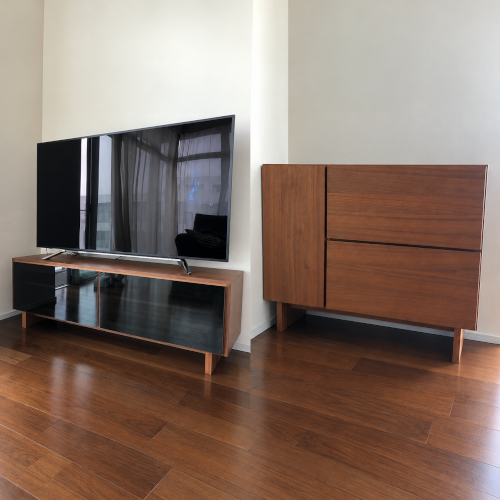
For this project, OJIKI Workshop was commissioned to modify a walnut TV stand and sideboard featuring beautiful natural wood grain. Both pieces were originally wall-mounted storage units, which we converted into freestanding furniture with newly crafted wooden legs.
In addition to making new legs, we added a top panel and side panels to the TV stand to adjust its depth. We also carefully matched the color of the new components to the existing furniture, preserving the character of the original design.
Rather than replacing everything, we retained the customer’s favorite features and adapted the furniture to suit their current home.
Here is a closer look at this custom furniture repurposing project.
🔸Table of Contents
1. Transforming Wall-Mounted Storage for a New Lifestyle
2. Converting the TV Stand into Freestanding Furniture and Adjusting Its Depth
3. Transforming the Sideboard into a Freestanding Storage Unit
4. Matching New Components and Finishes to the Original Walnut
5. Furniture Repurposing: Giving Favorite Pieces a New Purpose
1. Transforming Wall-Mounted Storage for a New Lifestyle
The furniture we received for this project consisted of a TV stand and sideboard that had previously been mounted on a wall.
Wall-mounted storage offers several advantages, including keeping floor space clear and creating a clean, uncluttered appearance.
However, when moving to a new home or rearranging a room, it may not be possible to install the furniture on a wall in the same way.
Our customer wanted to continue using their existing furniture while adapting it to their current living environment.
At OJIKI Workshop, we therefore converted both pieces into freestanding furniture with legs, preserving as much of the original storage units as possible.
2. Converting the TV Stand into Freestanding Furniture and Adjusting Its Depth
One of the most significant changes in this project was the structure of the TV stand.
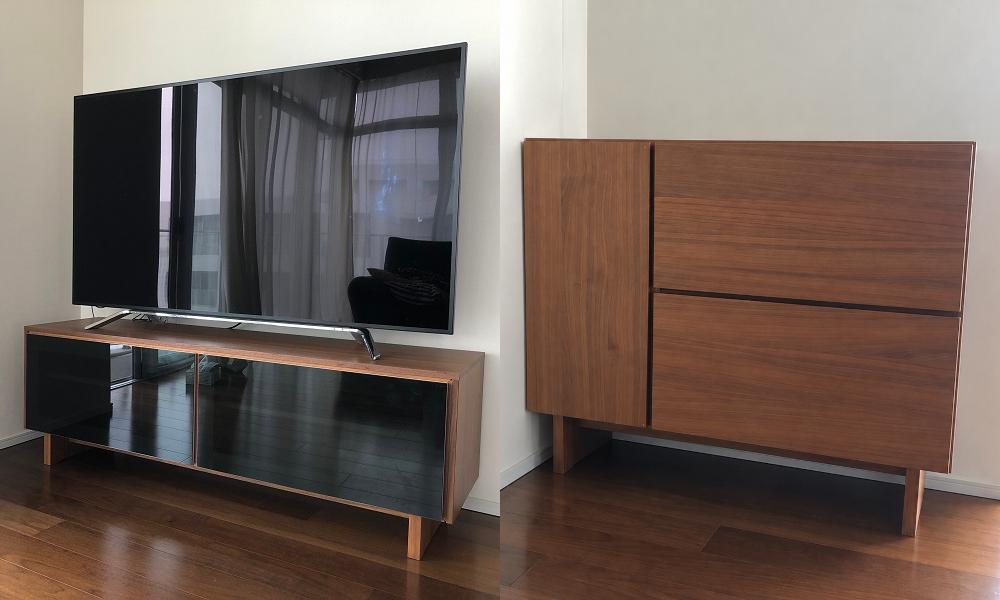
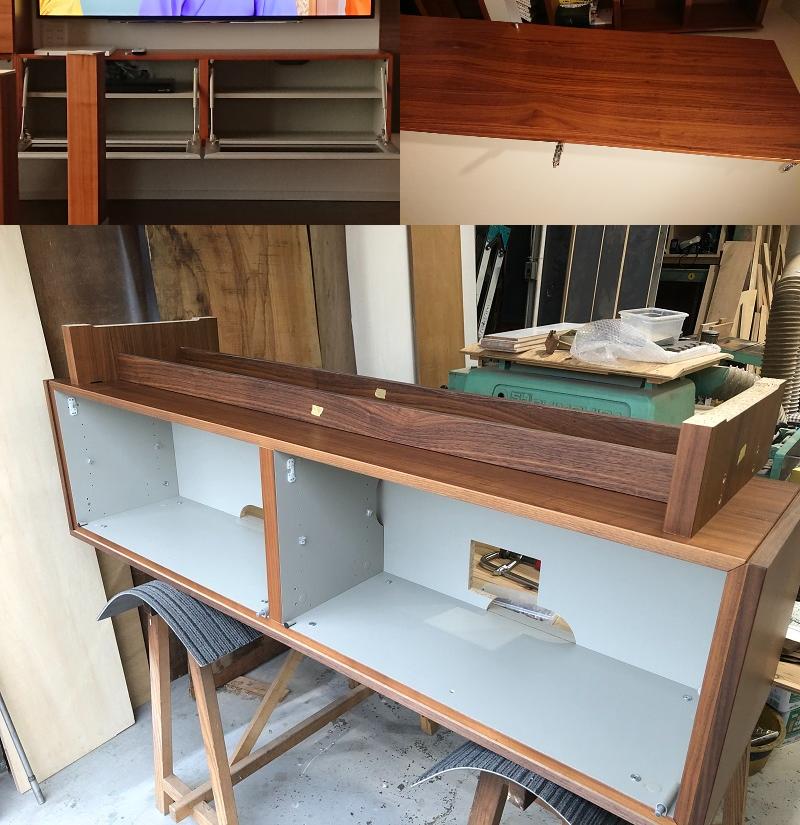
Originally designed as a wall-mounted cabinet, it was converted into a freestanding TV stand by making and installing new wooden legs.
We also added a new top panel and side panels to increase the depth of the cabinet.
Increasing the Depth for a More Practical TV Stand
Wall-mounted cabinets are sometimes designed with a relatively shallow depth to suit their original installation location and intended purpose.
However, a freestanding TV stand may require additional depth depending on the size of the television and the equipment being stored.
For this project, we added a wider top panel and new side panels to the existing cabinet, increasing its overall depth.
By adjusting the top surface, we made the furniture more practical for supporting a television.
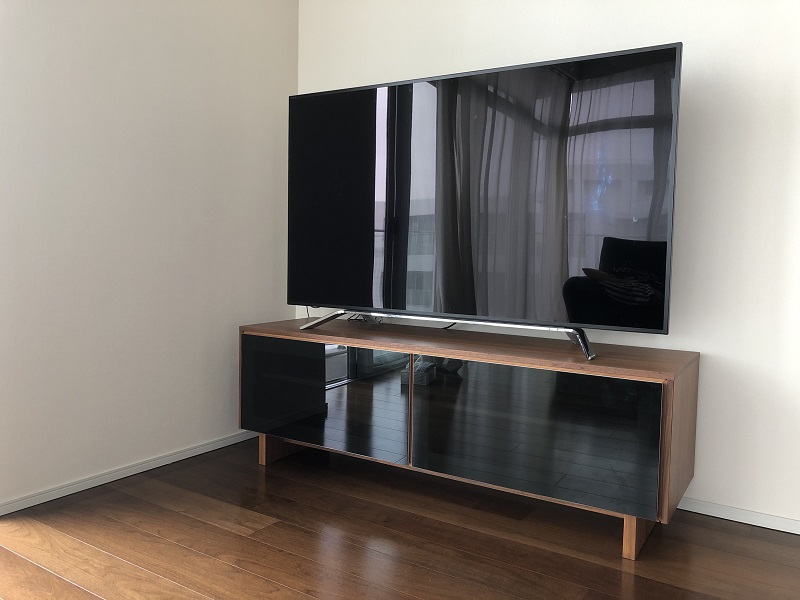
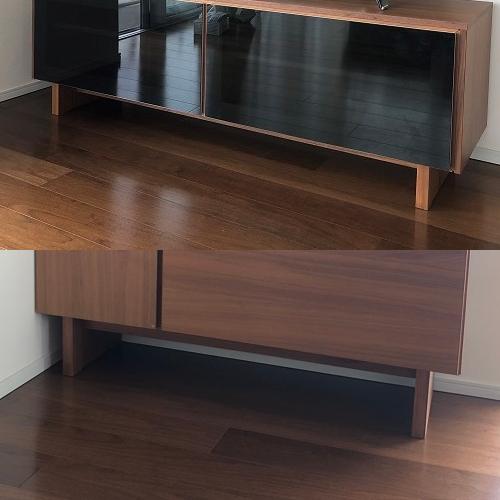
The completed TV stand features glossy black doors across the front.
The combination of rich walnut grain and black surfaces creates a clean, modern appearance.
By retaining the original doors and storage compartments while adding new legs and exterior components, we transformed the existing cabinet into a functional freestanding TV stand.
3. Transforming the Sideboard into a Freestanding Storage Unit
Alongside the TV stand, we also repurposed the matching sideboard.
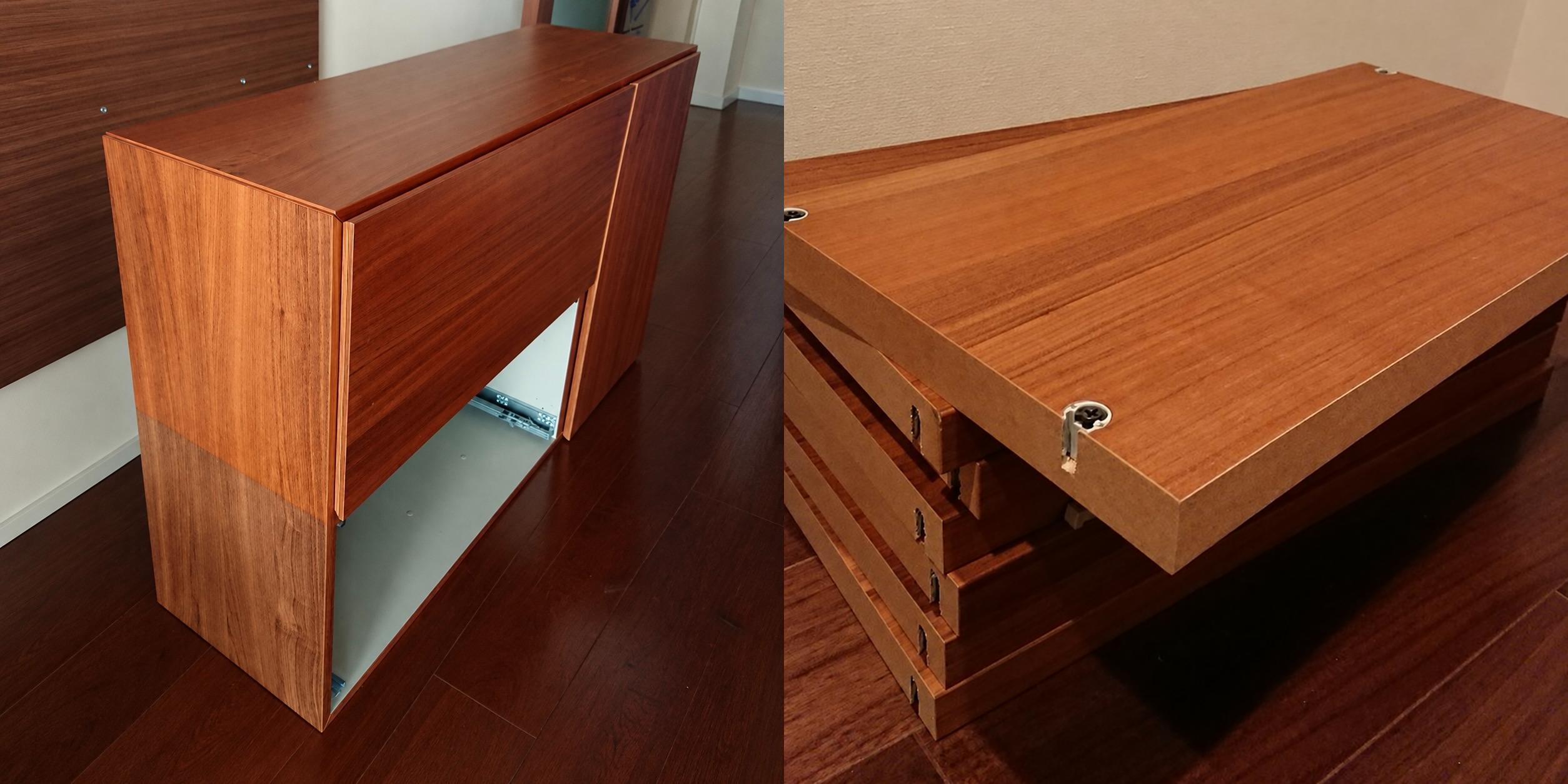
This cabinet had also originally been mounted on a wall.
We crafted and installed new legs, transforming it into a freestanding sideboard while preserving its original walnut appearance.
The finished sideboard features a refined, understated design that highlights the natural wood grain.
Its enclosed front storage compartments provide a convenient place to keep everyday essentials and smaller items neatly out of sight.
Adding Legs to Create Freestanding Furniture
Depending on its structure and condition, a wall-mounted cabinet can sometimes be converted into freestanding furniture by adding legs.
For this sideboard, we installed new legs without making major changes to the original cabinet design.
The space created between the cabinet and the floor gives the furniture a lighter, more open appearance.
By adding legs to both the TV stand and sideboard, we also created a coordinated design across the two separate pieces.
One of the advantages of furniture repurposing is the ability to preserve furniture you love while adapting it to a new location or purpose.
4. Matching New Components and Finishes to the Original Walnut
When adding new wooden components to existing furniture, matching the original color and finish is an important part of achieving a cohesive appearance.
Both the TV stand and sideboard featured the rich, natural grain of walnut.
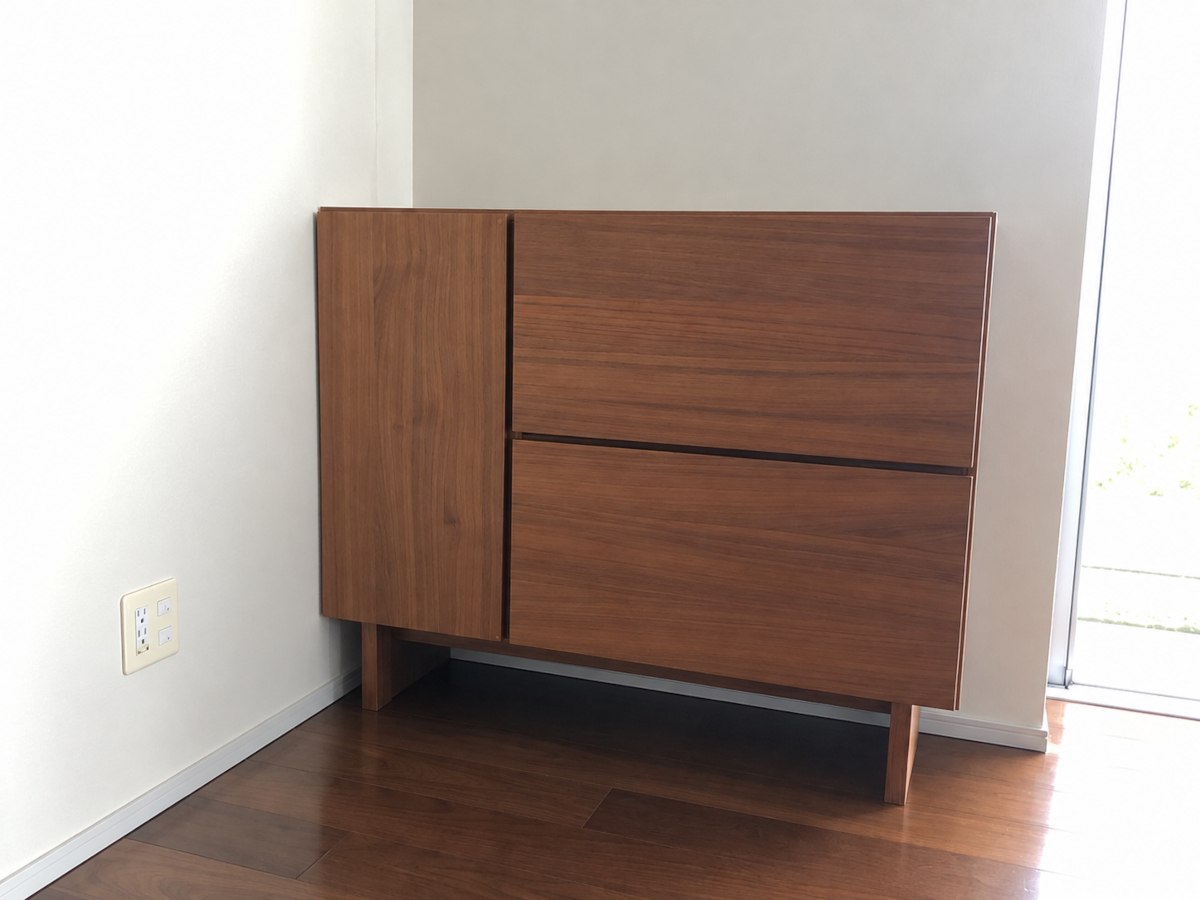
We therefore paid particular attention to finishing the newly crafted legs and additional components so that they would blend naturally with the original furniture.
Carefully Matching the Color of New Components
Even wood from the same species can vary in color and grain pattern.
Furniture that has been used for many years may also change color due to sunlight and natural aging.
As a result, newly added wooden components can sometimes look noticeably different from the original furniture.
For this project, we carefully examined the existing finish and adjusted the color of the new components to achieve a closer match.
Our aim was to make the modified areas blend naturally with the original furniture, creating the appearance of a single, unified design.
Summary of the Furniture Modifications
| Furniture / Component | Modifications |
|---|---|
| TV Stand | Converted from a wall-mounted cabinet into a freestanding TV stand with legs. |
| TV Stand Top and Side Panels | Added new panels to adjust and increase the cabinet’s depth. |
| Sideboard | Crafted and installed new legs to convert it into freestanding furniture. |
| New Components | Adjusted the color and finish to complement the original furniture. |
| Existing Storage Compartments | Preserved and reused as much of the original structure as possible. |
| Finished Design | A coordinated appearance that highlights the natural beauty of walnut wood grain. |
5. Furniture Repurposing: Giving Favorite Pieces a New Purpose
When furniture no longer suits our lifestyle, replacing it with something new may seem like the most straightforward option.
This is particularly true for large storage units, which may no longer fit their original location after moving or rearranging a room.
However, if the furniture itself is still in usable condition, modifying certain parts may allow it to continue serving a useful purpose.
As demonstrated in this project, adding legs or adjusting dimensions can make existing furniture suitable for a new living environment while preserving its original character.
What Can Furniture Repurposing Involve?
Furniture repurposing involves modifying existing furniture to suit modern living, whether by changing its dimensions, adapting its function, or improving its usability.
However, the modifications that can be made depend on the condition and construction of each piece.
Some requests may not be possible due to structural limitations or the condition of the original furniture.
When we receive a furniture repurposing inquiry, we begin by examining the existing piece to determine which parts can be preserved and what modifications may be necessary.
We then consider how the original furniture can be transformed into something that meets the customer’s new requirements and propose a suitable approach.
At OJIKI Workshop, we work closely with our customers to explore ideas and develop furniture that suits their needs.
This collaborative process is one of the unique benefits of custom furniture repurposing.
Frequently Asked Questions (Q&A)
Q1. Can a wall-mounted TV cabinet be converted into a freestanding TV stand?
Yes, depending on the furniture’s structure and condition.
In this project, we converted a wall-mounted TV cabinet into a freestanding unit by adding legs, a new top panel, and side panels.
However, because wall-mounted furniture is not originally designed to stand on the floor, it is important to assess the strength and stability of the cabinet, as well as the appropriate positions for attaching the legs.
Q2. Can you change only the depth or height of an existing piece of furniture?
Yes. Depending on its construction, it may be possible to modify only certain dimensions.
For example, we may be able to increase the depth by making a new top panel or adjust the height by adding legs.
We examine the existing furniture before recommending a suitable modification method.
Q3. Can the color of new wooden components be matched to the original furniture?
Yes. We can adjust stains and finishes to achieve a color that closely resembles the existing furniture.
However, because wood varies naturally in grain and color, and older furniture may have changed appearance over time, an exact match is not always possible.
We aim to achieve a finish that blends as naturally as possible with the original piece.
Q4. Is furniture repurposing less expensive than buying new furniture?
It depends on the type of furniture and the modifications required.
Even when the original furniture is reused, the project may involve several stages, including disassembly, woodworking, repairs, fabrication of new components, and finishing.
For this reason, repurposing is not necessarily less expensive than purchasing new furniture.
However, preserving a favorite design and continuing to use familiar storage compartments are valuable advantages of furniture repurposing.
We recommend considering not only the cost but also your attachment to the furniture and how you would like to use it in the future.
Q5. Can you repurpose furniture purchased from another manufacturer?
Yes. OJIKI Workshop accepts inquiries about repairing and repurposing furniture purchased from other manufacturers.
If you provide photographs, dimensions, and details of the modifications you would like to make, we can review the furniture and assess whether the requested work is possible.
Conclusion | Transforming Existing Furniture to Suit a New Lifestyle
In this project, we transformed a walnut TV stand and sideboard from wall-mounted storage units into freestanding furniture.
For the TV stand, we crafted new legs and added a top panel and side panels to adjust its depth.
We also made new legs for the sideboard, allowing both pieces to be used as freestanding storage furniture.
The newly added components were carefully finished to complement the original walnut, preserving the beautiful wood grain and creating a coordinated appearance.
A change in lifestyle does not always mean that existing furniture needs to be replaced.
Sometimes, it is possible to preserve a favorite design and familiar storage features while modifying only the parts that need to change.
At OJIKI Workshop, we offer furniture repairs, maintenance, and repurposing services to help customers continue enjoying their valued furniture.
We carefully consider the condition of each piece and the customer’s requirements before recommending suitable modifications.
If you are thinking:
“I want to convert wall-mounted furniture into freestanding furniture.”
“I would like to change the dimensions of my furniture.”
“I want to use my existing furniture for a different purpose.”
Please feel free to contact us. We would be happy to discuss your ideas.
From Your Initial Inquiry to Delivery | How to Order from OJIKI Workshop
At OJIKI Workshop, we guide customers through each stage of the custom furniture process, including those ordering custom-made furniture for the first time.
We take the time to understand your preferences and requirements before beginning production.
STEP 1 | Contact Us
Get in touch by phone, LINE, or our online contact form.
You can tell us about the intended location, the type of furniture you have in mind, and what you would like to store. There is no need to have every detail decided before contacting us.
STEP 2 | Consultation and Planning
We discuss your preferred dimensions, design, wood materials, storage requirements, and budget.
Reference photographs and measurements of the intended space can help us develop a more detailed proposal.
STEP 3 | Estimate
Based on your requirements, we provide an estimate of the production cost.
Online estimates are free of charge
STEP 4 | Design Approval and Production
Depending on the project, we review the design with you using drawings or sketches before carefully crafting your furniture in our workshop.
STEP 5 | Delivery and Installation
Once your furniture is complete, we arrange delivery.
If installation is required, we can discuss the arrangements based on your project.
At OJIKI Workshop, we handle not only custom-made furniture and architectural woodwork, but also a wide range of repair and maintenance services, including restoration of high-gloss painted finishes on well-used furniture and the revival of antique furniture.
For detailed consultations and estimates, please feel free to contact us via our official LINE account, by phone, or through our inquiry form.
Phone: 046-204-5592 (Weekdays 9:00–18:00)
LINE: OJIKI Workshop Official Account


《About OJIKI Workshop》
OJIKI Workshop manufactures and sells furniture, doors, and architectural woodwork made from solid natural wood.
In addition to selling our original products, we also provide custom-made furniture, remodeling, repair, and maintenance services for unused furniture, aged doors, and built-in woodwork that no longer suits modern lifestyles.
For remodeling, repair, and maintenance projects, we listen carefully to our clients’ requests regarding design, functionality, and usability before beginning production. This approach has earned us many words of appreciation from our customers.
We hope to meet the needs of customers who wish to use their wooden furniture and wooden architectural elements with care for many years to come.
⚫︎You want to repair and maintain beloved furniture or doors so you can continue using them for a long time.
⚫︎You want to remodel furniture that your family has used for many years so it better suits your current lifestyle.
⚫︎You want to order custom-made furniture or doors made from natural materials, with careful attention to both design and usability.
⚫︎You want to live in a healthier environment, both physically and mentally, by using natural materials in the furniture and doors of your home.
⚫︎You want to incorporate a relaxing environment with natural materials into your office.
⚫︎You want to create a shop that uses plenty of natural materials.
And more.
For consultations about furniture and architectural woodwork made from natural materials, please leave it to us at OJIKI Workshop.
We look forward to hearing from you.
==============
OJIKI Co., Ltd.
Wooden Furniture and Wooden Architectural Woodwork [Custom-Made, Remodeling, Repair]
Zama, Yamato, Sagamihara
5-49-16 Hibarigaoka, Zama City, Kanagawa 252-0003, Japan
Phone: 046-204-5592 (Weekdays 9:00–18:00)
Representative Director: Kenichi Okawa
Profile
Graduated from the Department of Architecture, Faculty of Engineering, Tokai University
Graduated from Chippendale International School of Furniture in the United Kingdom
(Furniture making and antique furniture repair)
Trained for three years at Rengesou Motomachi Workshop
Based on the traditional production process of Yokohama furniture, which has continued for more than 100 years, he continues to explore new designs using materials such as iron, leather, and glass while engaging in woodworking every day.
==============